
In the Mushroom News
Biohybrid Robotics: How Living Oyster Mycelium Is Steering Tech
Ten Mile Mushrooms · September 14, 2026
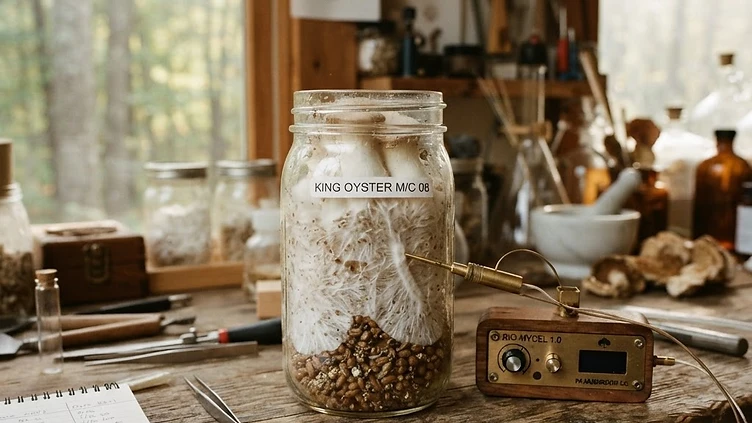
Researchers have connected live king oyster mycelium to mechanical limbs, enabling fungi to process light stimuli and drive movement—with profound lessons for home cultivators.
Out here among the hardwood ridges and mossy hollows of our 70-acre woodland in Pennsylvania, we spend our days attuned to the subtle rhythms of fungi. Whether checking colonization on grain spawn jars in the clean room or observing fresh pinheads emerge on our certified organic fruiting blocks, we are constantly reminded that mycelium is not passive mold. It is a sensitive, responsive network navigating its environment with quiet biological purpose.
A remarkable recent development in scientific engineering brings that fundamental truth into astonishing focus. As highlighted in recent reviews of fungal innovation, Cornell University roboticists and biophysicists have developed living biohybrid robots powered directly by the vegetative mycelium of King Oyster mushrooms (Pleurotus eryngii) MicroWake. By integrating cultured mycelial tissue directly into electromechanical systems, researchers discovered that the fungal network can process external sensory stimuli—specifically pulses of ultraviolet light—and convert those environmental cues into functional electrical spikes that control robotic limbs and wheeled chassis.
The Mycelial Nervous System at Work
For centuries, growers and foragers have known that fungi react dynamic to moisture, air exchange, heat, and nutrition. But seeing King Oyster mycelium physically steer a mechanical vehicle changes how we visualize that underground network. The researchers tapped into the natural bioelectrical impulses that fungi use to communicate nutrient availability and stress across their hyphal web. When exposed to light pulses, the living tissue produces electrical spikes analogous to simple animal neurobiology, signaling the mechanical actuators to step or roll forward.
Unlike synthetic electronics or rigid silicone components, living mycelial sensors are self-healing, biodegradable, and exceptionally resilient. They naturally withstand fluctuating environments that would corrode conventional wiring, showing how fungal biology can partner with human engineering without synthetic waste.
What This Means for the Home Cultivator
While robotics may sound worlds away from the quiet joy of misting a fruiting chamber in your kitchen or tending outdoor log beds, the biological principles behind this experiment are immediately practical for every passionate grower.
- Respecting the Senses of Your Spawn: We often teach home growers that mycelium is alive to the touch. It senses the slightest drop in barometric pressure, micro-shifts in ambient moisture, and changes in light spectrum. Just as UV triggers an electrical cascade in the lab, ambient natural light is often the vital cue that tells saprotrophic mycelium it has breached the forest duff and must pin immediately.
- Strain Selection and Tissue Health: The researchers chose Pleurotus eryngii specifically for its robust, dense cellular architecture and rapid hyphal elongation. When selecting genetics—whether liquid culture, grain spawn, or colonized dowels—prioritize clean, vigorous strains grown on organic media. Vigorous mycelium isn’t just about yields; it represents an energetic, disease-resistant network ready to colonize wood and grain swiftly.
- The Future of Mycofabrication and Living Materials: Beyond robotics, this breakthrough underlines a broader transformation in how humanity views fungal tissue PMC. Mycelium is actively replacing petroleum-based polystyrene, synthetic faux leathers, and toxic resins. When your mushroom kit has finished fruiting delicious culinary clusters, that dense block of colonized sawdust remains a durable structural material—or, when returned to the soil, a microbial booster that regenerates garden beds NCAT.
Closing the Loop
At our farm, we often remind visitors that working with fungi is less about controlling nature and more about learning its vocabulary. When you inoculate a fresh batch of sterilized grains or slice into the meaty stem of a King Oyster for supper, take a second to marvel at the creature on your counter. Beneath the savory flavor and medicinal polysaccharides lies an intricate living computer—one that we are only just beginning to truly understand.
