
Farm & Cultivation Spotlight
The Art of the Substrate: Cultivating Mushrooms in Harmony with Nature
Ten Mile Mushrooms · October 12, 2026
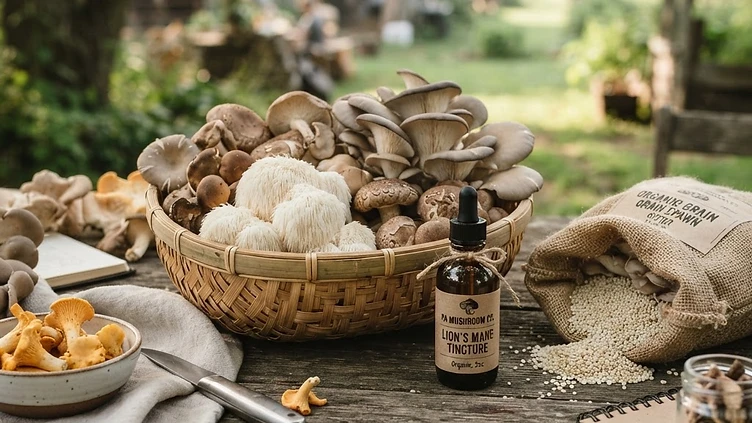
Discover how we transform simple organic materials into nutrient-dense mushrooms, honoring Pennsylvania's rich mycological heritage through sustainable, farm-direct practices.
The Foundation of Fungal Growth
At Ten Mile Mushrooms, nestled within 70 acres of Pennsylvania woodland, we often say that we aren't just growing mushrooms—we are cultivating an ecosystem. While the final harvest of a beautiful Lion’s Mane or a cluster of Oysters is what reaches your kitchen table, the true magic happens long before the first pin appears. It begins with the substrate, the life-giving medium that serves as both home and pantry for the mycelium.
In the world of mycology, the substrate is the workhorse of the operation. As saprotrophic organisms, mushrooms thrive by breaking down organic matter. By mimicking the natural decomposition processes found on our forest floor, we can create a controlled, nutrient-rich environment that allows our cultures to flourish without the need for synthetic inputs.
The Science of Sustainability
Mushroom cultivation is, at its heart, a beautiful act of recycling. Whether we are using hardwood sawdust, straw, or agricultural by-products, we are taking materials that might otherwise be discarded and transforming them into high-quality, organic food. This circular approach is a cornerstone of our farm-direct philosophy.
For the home grower, understanding your substrate is the first step toward mastery. Different species have different preferences:
- Oyster Mushrooms: These are the resilient pioneers of the mushroom world. They thrive on a variety of lignocellulosic materials like wheat straw or hardwood pellets, making them an ideal entry point for beginners.
- Lion’s Mane: These delicate, brain-like fungi prefer a more structured diet, typically thriving on supplemented hardwood sawdust blocks that provide the density they need to grow large and firm.
- Agaricus Varieties: Unlike wood-loving species, these traditional mushrooms prefer a composted substrate, a process that involves careful temperature management and organic enrichment to create a selective medium.
From Forest to Kitchen
The process of preparing these substrates—often involving pasteurization to ensure our desired fungi have a head start against competitors—is a labor of love. By maintaining the right moisture levels and providing a consistent, clean environment, we allow the mycelium to colonize the substrate fully. This 'spawn run' is the period where the fungus builds the energy reserves necessary to produce the fruiting bodies you enjoy in your favorite recipes.
We believe that having a relationship with your food is one of the most rewarding experiences a person can have. Whether you are using one of our organic grow kits on your kitchen counter or inoculating your own logs in the backyard, you are participating in a tradition that spans centuries. You are learning to read the signs of the mycelium, adjusting for humidity and airflow, and ultimately, witnessing the incredible efficiency of nature.
At Ten Mile Mushrooms, our goal is to provide you with the same high-quality spawn and supplies that we use on our own farm. We invite you to slow down, observe the process, and appreciate the quiet, steady work of the mycelium. After all, the best meals are the ones where you can taste the care, the soil, and the season in every bite.
