
In the Mushroom News
The Hidden Life of Your Mycelium: Understanding Bacterial Partners
Ten Mile Mushrooms · November 23, 2026
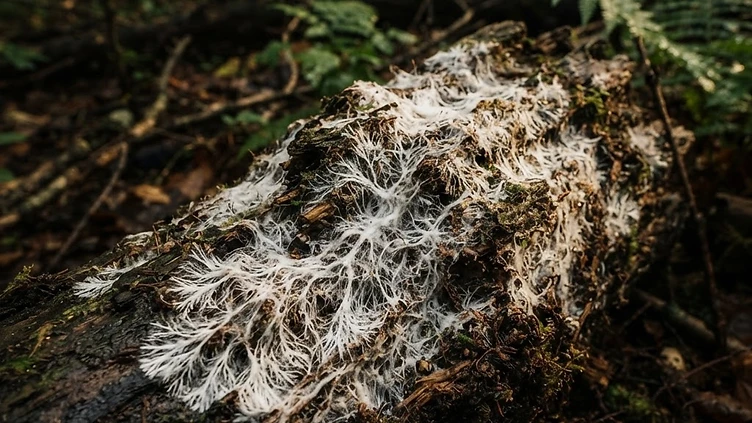
New research reveals that the mycelium in your grow kits isn't working alone; it carries a complex community of bacteria that may hold the key to faster, more robust harvests.
The Hidden Life of Your Mycelium: Understanding Bacterial Partners
When you open one of our Ten Mile Mushrooms grow kits, you are looking at the culmination of months of careful cultivation. We often talk about the mycelium—that beautiful, white, thread-like network—as the heart of the mushroom. But a fascinating new study published in Microbial Ecology suggests that we have been overlooking a crucial part of the team: the invisible bacterial entourage that travels with every strain of mycelium [3].
For years, home growers have focused on the "big three" of cultivation: substrate, temperature, and humidity. While these remain the pillars of a successful harvest, this recent research highlights that the mycelium is not a solitary organism. Instead, it acts as a host to a diverse community of symbiotic bacteria. By using advanced genetic sequencing, researchers discovered that while the overall diversity of these bacterial communities remains consistent across different strains, the specific composition of these "passengers" varies significantly from one strain to another [3].
Why does this matter for your home grow?
The study found that these bacterial partners are not just along for the ride; they appear to be actively involved in how the fungus functions. Specifically, these bacteria seem to influence:
- Growth Speed: The rate at which your mycelium colonizes a substrate may be partially dictated by the metabolic support provided by its bacterial companions [3].
- Enzyme Activity: Mushrooms rely on extracellular enzymes to break down woody substrates into food. These bacteria can complement or modulate those enzymes, effectively helping the mushroom "digest" its environment more efficiently [3].
- Nutrient Content: The chemical makeup of the mycelium itself is influenced by these interactions, suggesting that the "quality" of the fungus is a collaborative effort [3].
At Ten Mile Mushrooms, we have always believed that the best results come from respecting the natural biology of the fungi. This research confirms that when we select a high-performing strain, we are also selecting a specific, finely-tuned biological partnership. It explains why some strains seem to thrive on specific substrates while others struggle—it is not just about the genetics of the mushroom, but the synergy between the fungus and its microscopic allies.
Looking Ahead
As we continue to refine our grain spawn and cultivation supplies, this discovery opens up exciting possibilities. In the future, we may be able to "manage" these communities to improve yields or even enhance the nutritional profile of the mushrooms you grow in your own kitchen. For now, it serves as a humble reminder that even in the quiet, dark corners of a mushroom bag, there is a bustling, complex ecosystem working hard to bring you that next delicious harvest.
Whether you are a seasoned pro or just starting your first kit, remember that you are not just growing a fungus—you are stewarding a living, breathing, and highly social network. Keep your environments clean, your substrates fresh, and your curiosity high. The more we learn about these hidden partners, the better we can support the incredible life cycle of the mushrooms we all love.
